


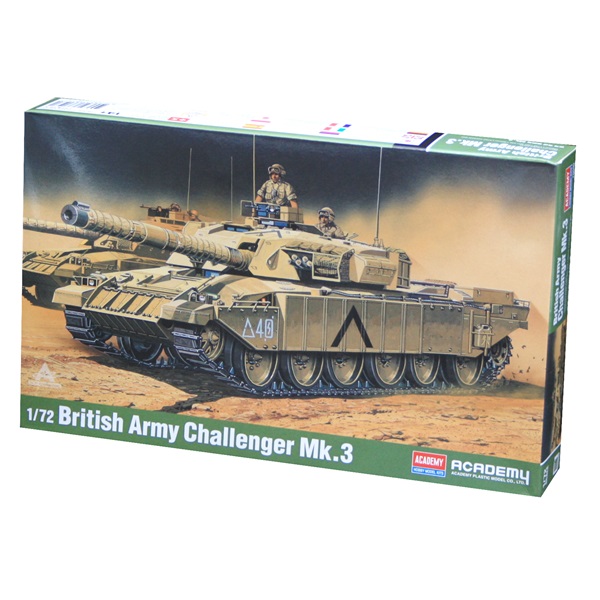
The Challenger 1 tank was originally developed by the British Ministry of Defence’s Military Vehicles and Engineering Establishment (MVEE) in Chobham, Surrey, as an upgraded version of the Chieftain tank series. This design was initially conceived for an Iranian order, which sought an improved version of the Chieftain to meet specific operational needs. The variants under development for Iran were the Chieftain Mk5(P) and the FV4030/1, FV4030/2 Shir (Lion) 1, and FV4030/3 Shir 2. However, with the fall of the Shah of Iran and the subsequent cancellation of the Iranian order, the UK’s MBT-80 project also collapsed. This led to the British Army becoming the primary customer, prompting further development of the tank to suit the needs of the Western European theatre.
Initially known as “Cheviot”—after a range of hills in the UK—the tank was later renamed “Challenger,” a name that harkened back to the Cruiser Mk VIII Challenger of World War II.
Key Features and Innovations:
One of the most significant advancements of the Challenger 1 was its revolutionary Chobham armour, which offered a level of protection far superior to the standard Rolled Homogeneous Armour (RHA) used by Western tanks at the time. Chobham armour, a composite material incorporating ceramics and other layers, provided exceptional resistance to both kinetic energy and chemical energy threats, making the Challenger 1 one of the most heavily protected tanks of its era. This armour design was later adopted by other major tank programs, most notably the American M1 Abrams.
Another key innovation in the Challenger 1 was its hydropneumatic suspension system, which significantly improved the tank’s cross-country mobility. The suspension allowed for greater suspension arm travel, which contributed to better control over bumps and uneven terrain. This system, along with its superior shock absorption, made the Challenger 1 highly effective in diverse combat environments, particularly in rough or challenging terrain.
In summary, the Challenger 1 combined advanced armour technology and superior mobility, making it one of the most formidable main battle tanks of its time. These features, particularly the Chobham armour and hydropneumatic suspension, were later incorporated into the next generation of Western tanks, ensuring that the Challenger 1 would leave a lasting legacy in tank design.
Related products
-
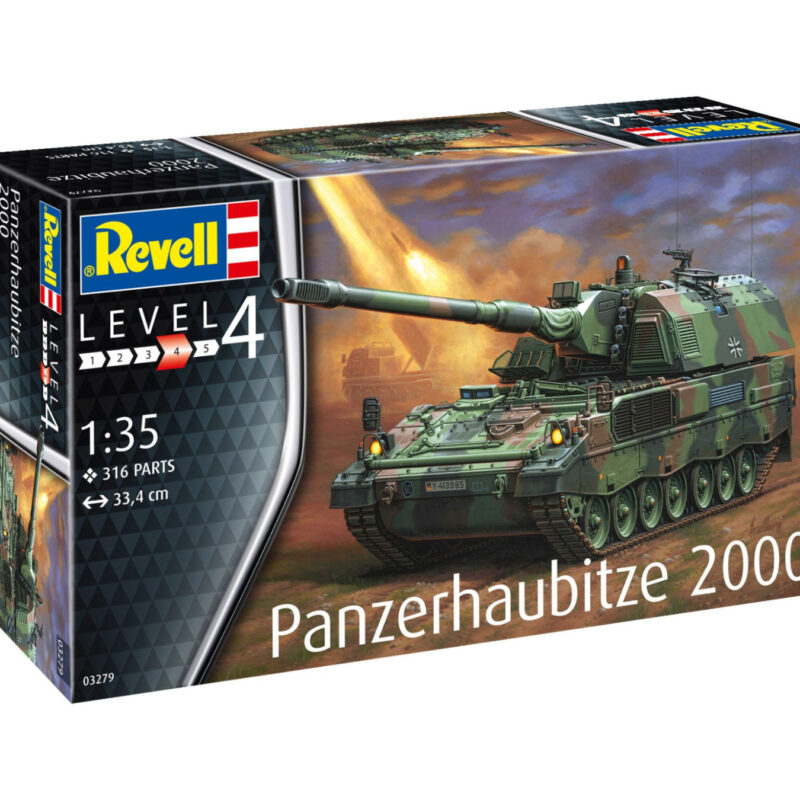
1/35 Panzerhaubitze 2000
R780,00A model construction kit of the German Army ‘s modern Armoured Howitzer 2000, a self-propelled armoured artillery howitzer. Scale 1/35. 316 parts. 33,4 cm length. Suitable […]
-
1/72 V-22A Osprey
R550,00The innovative Bell Boeing V-22 Osprey project was initiated during the 1980s, but only emerged into production and was deployed to various arms of the US […]
-
1/72 Academy Merkava Mk.3
R270,00he Merkava (Hebrew for chariot) is an Israeli main battle tank designed since 1974 and entered mass production in 1979. The design team worked under the […]


Reviews
There are no reviews yet.